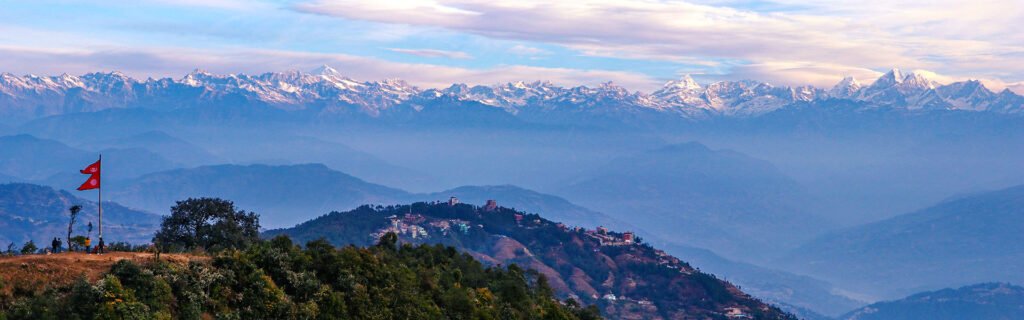
Kathmandu-Pokhara Sightseeing Tour
Description

Destination
Kathmandu-Pokhara

Duration
6 Days

Grade
Easy

Max Altitude
1,400m

Group Size
1-18 Pax

Meal
Breakfast for 5 days

Activity
Sightseeing, Boating, Canoeing etc

Accommodation
3-star hotels

Season
Any time of the year
Kathmandu and Pokhara are the two major cities in Nepal. While one is known for its rich history and cultural traditions with many UNESCO-listed sites, the other prides itself in its natural beauty including stunning sights of the Himalayas, calm lakes, and many other natural sites. The Kathmandu-Pokhara Tour takes you on a journey of culture and nature, giving you memories for years to come.
During this 6-day long journey, you will visit many historical and religious sites in Kathmandu and then experience an adventurous and tranquil city tour of Pokhara.
Kathmandu is not just the country’s capital but is also known as the city of temples, art, and tradition. Cultures have been nurtured here. Various temples and stupas like Swayambhunath and Boudhanath are testaments to strongly established Hinduism and Buddhism culture. The Newari are the natives of Kathmandu and their contribution to the country through art, architecture, festivities and dances can be profoundly seen across the city’s streets.
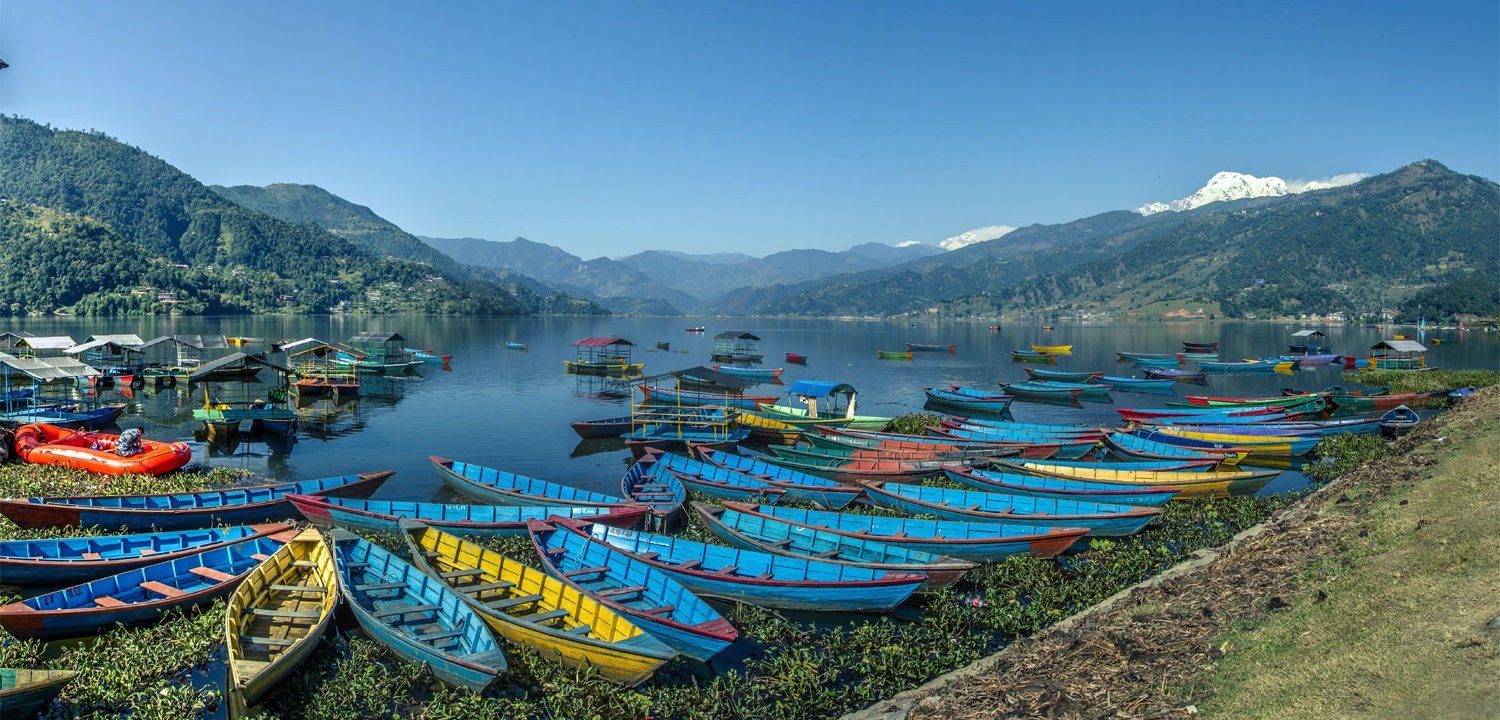
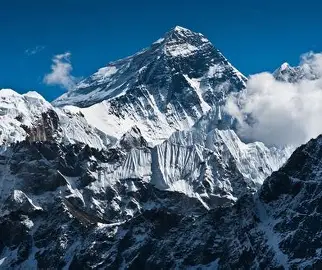
Pokhara has in recent years been announced as the tourism capital of Nepal. When describing Pokhara, we always start with the mountain ranges and the snow-capped mountains of Macchapucchre and Annapurna. On a clear sunny day, these mountains offer stunning sights in the horizon. Known as the city of 7 lakes, Pokhara have a lot of water activities to offer. From boating to casually sitting by the lake side and embracing the cool breeze, or a nice dinner at restaurants and cafes nearby, you will definitely find something that suits you. Pokhara also offers various intriguing caves to explore in the city. Each has its own unique significance and beauty.
Itinerary (Options to Customise)
Upon your arrival in the Kathmandu airport (KTM) you will be greeted by a representative from Sherpa Expedition Guide & Adventure. After completing your custom formalities (Visa, etc) and picking up your luggage, look for our representative with a display board showing your name at the arrival gate. You will be transferred to your Hotel in Thamel, Kathmandu. After check-in, you will meet your guide for a quick briefing of the itinerary.
On the 2nd day of the Kathmandu-Pokhara Tour, we make our way towards Pokhara. There are two options to travel to Pokhara.
(i) By plane, it is a 30-minute flight
(ii) By car, it is an approximate 6-7 hours (depending on road conditions).
Note: This package assumes option (ii) by car. Should you wish to opt for (i) by plane, cost of flight will be in addition to the package price.
After we reach Pokhara city, you can take some rest and later in the evening, you can enjoy a stroll around the famous Phewa Lake and/or take a boat ride under the casting shadow of the prominent Mt. Machhapucchre.
Pokhara is the center to a variety of activities and sports. For the sporty and adventurous ones, Pokhara offers a wide range of outdoor sports, including rafting, skydiving, ziplining, boating, bungy jumping and more.
Depending on your preference and/or energy levels, our guide will share the available activities with you and your day’s itinerary can be customized to your personal preference. Some suggested activities listed below:
World Peace Stupa
On Phewa Lake, small boats are available for rent. Renting a boat is an affordable option, if you are keen to go fishing. Alternatively, you may rent a boat to go to the foothill of the World Peace Pagoda and hike up.
Hiking the hill will take about 50–60 minutes, it is a manageable walk suitable for hikers of all ages. There are some eateries along the way if you are in need of a break or food to fuel the climb. Sights are stunning on the journey up.
Alternatively, since the left side of the lake is less crowded than the right, you are able to drive up and subsequently walk the whole distance, that is where we will hike up.
There are numerous cafes and eateries on the opposite side. You should stop for a nice coffee break if you go towards that direction.
The World Peace Pagoda is a sight to behold. It is open till 4:30 PM and makes a pleasant photo location. The spot offers excellent views of the Himalayas on clear, bright days.
Begnas Lake
Unlike the popularity and crowd of Phewa Lake, a 40-minute drive to Begnas Lake offers a quiet and peaceful environment. It is the third largest lake in Nepal surrounded by lush green hills famous for boating, fishing, and enjoying the fish cuisines in the restaurants by the lake. If you are in the mood to spend a few hours in a calming site, Begnas is the best place to visit. The natural beauty and the cool surroundings of Begnas set you in the mood of peace and calmness.
Shop for Souvenirs
Pokhara’s Lakeside houses numerous arts and crafts shops where you can shop for various handmade crafts and souvenirs. The arts and crafts you see in Pokhara might resemble the ones you see in Kathmandu but it is generally a pleasant and different feel shopping in Pokhara.
International Mountain Museum
Every year, about 70,000 tourists from both local and foreign countries visit the International Mountain Museum (IMM). This museum keeps track of historical documents and displays global advancements in peak and mountaineering from decades ago up to current day. The Hall of Great Himalayas, the Hall of Fame, and the Hall of World Mountains are the three primary display halls in the museum.
As an effort to capture the centuries-old traditions and ideals of the Nepalese people, the museum features displays of iconic peaks, biographies of notable mountaineers, and the traditions and ways of life of the mountain people. Specifically, it depicts the Sherpas of Nepal. All the famous names we hear in the mountaineering industry would not have been possible without the help of the Sherpas.
Mahendra Cave
The Mahendra Cave is among Pokhara Valley’s most popular tourist destinations. 10-minutes’ drive from the major city sits the small village of Batulechaur, this is where the cave is situated. Mahendra Bir Bikram Shah, the late king of Nepal, is honored by naming the Mahendra Cave after him.
The cave is a natural tunnel where visitors can stroll through and observe various rock formations along the wall, including limestone that shines in the light. Mahendra Cave, one of the gloomier sites in Nepal, allows guests to explore the tunnel’s darker interior. Artwork of gods, goddesses, and tusks from elephants may be seen on the cave’s interior walls.
After exploring the stunning and happening Pokhara Valley, we will head back to Kathmandu to explore the ancient culture and history of the city and its magnificent sites.
Similarly, we will either take a flight (cost excluded) or drive by car to Kathmandu depending on your preference. After arriving in Kathmandu, we will get some rest and prepare ourselves for the exploration the following day.
Kathmandu is a living museum where history speaks from every corner, its streets witness the seamless intertwining of Hindu and Buddhist culture, festivities, art, and dances.
After breakfast, we will be all set to immerse in the country’s culture and visit the majestic Stupas, Durbar Squares, and various temples where each one of them has its story to tell.
Swayambhunath Stupa
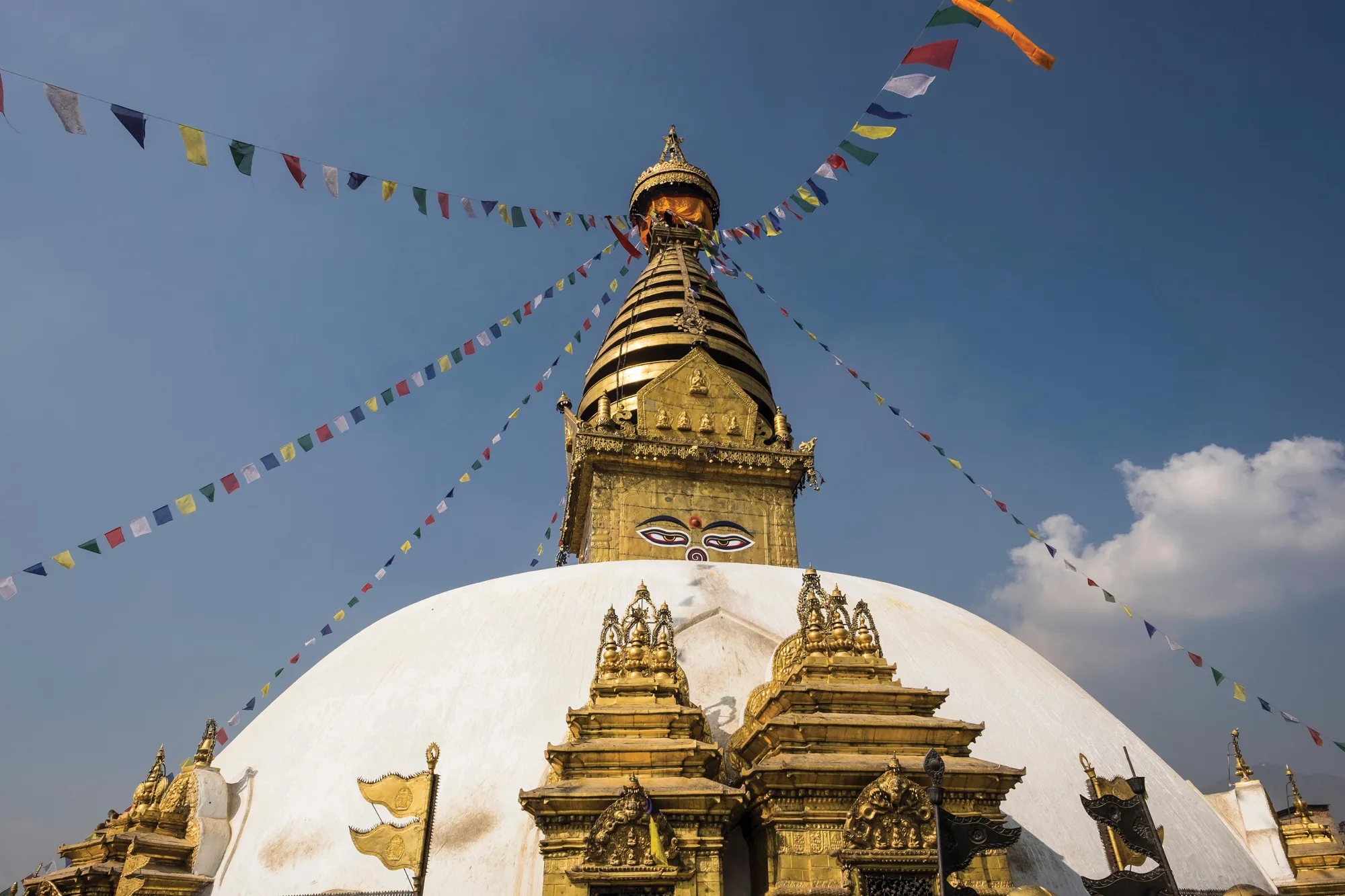
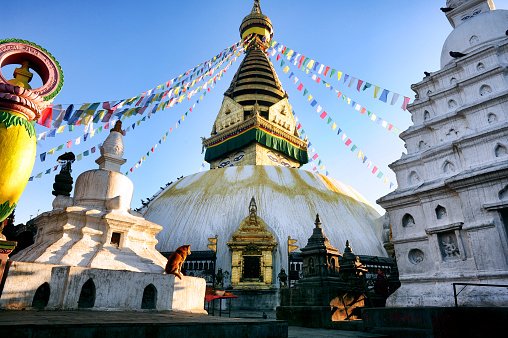
Swayambhunath, located at a hilltop in Kathmandu, is a renowned Buddhist monument sacred to both Buddhists and Hindus. The very structure of the Swayambhunath is a symbol where its base signifies stability and its towering peak represents the path to enlightenment.
The legend says that Syamabhunath was self-formed and emerged from a primordial lake. For some, it is a manifestation of Buddha himself and some see it as a representation of enlightenment.
The climb to the Swayambhunath is led by a flight of stairs lined with monkeys, hence the nickname “Monkey Temple”. While enjoying the climb, be mindful of your belongings.
Along with its spiritual significance and importance as a pilgrimage site, Swayambhunath offers a tranquil atmosphere where you devour a panoramic view of Kathmandu Valley and the majestic Himalayan range in the distance. It is a place where nature, religion, and spirituality converge giving you the utmost experience of peace and serenity.
Pashupatinath Temple
Pashupatinath Temple, listed as a UNESCO World Heritage Site, is a powerful and sacred site for Hindus. The temple dedicated to Lord Shiva celebrates both life and death. Where Devotees from around the country pray for their wellbeing, Pashupatinath also has huge open cremation rituals going at the banks of Bagmati River.
The area within the Pashupatinath has numerous smaller shrines dedicated to various Hindu deities and there is the main temple where the Lingam of Lord Shiva resides. Many Sadhus and monks hold this place significant in their hearts for their spiritual pursuits. Therefore, the temple is highly revered, and people from all over come to place their offerings, celebrate auspicious occasions, and even perform last rites.
Patan Durbar Square
Another UNESCO World Heritage site is the Patan Durbar Square. This magnificent palace built in the 17th century is a testament to the architectural mastery of the Malla dynasty. The layout of the place is organized as the three main courtyards known as Mul Chowk, Sundari Chowk, and Keshav Narayan Chowk. These spaces were once used for religious gatherings and royal ceremonies.
The intricate woodcarvings in the struts and doorways of the palaces and temples speak the culture, honor, and contribution of the craftsmen of the era. There are many temples and statues in the area. One of the most important sites here is Krishna Mandir, a three-storied structure. The stone carvings on the pillars narrate the events of Mahabharata and Ramayana. This depiction speaks of the history and its importance that is still alive and significant in shaping the culture to date.
Patan Durbar Square is a cultural experience that leaves you struck by Nepal’s artistic and vibrant traditions.
Kathmandu Durbar Square
Kathmandu Durbar Square is also known as Basantapur Durbar and Hanuman Dhoka. The durbar square is made up of three squares; the Basantapur square area to the south, the main durbar square to the west, and in the northeast is the second durbar square.
The outer complex of the palace treasures numerous temples carved meticulously by the craftsmen of Malla’s reign. Look out for Kasthamandap, Shiv-Parvati Temple, the intriguing Kumari Ghar, the octagonal Krishna Temple, and the Kal Bhairav.
The inner complex houses the main palace buildings and courtyards. The royal palace is where the kings of the Shah and Malla Dynasty ruled over the city. Now they have been turned into museums showcasing artifacts from Nepal’s royal past.
As we enter into this historical site, the vibrancy is such that you read the history of this city through its architecture, sculpture, religious artifacts, coins, weapons, and tools.
This is the last day of your Kathmandu Pokhara Tour. Our representative will drop you off at the airport at least 3 hours before your flight time.
Cost Includes
- Airport pick-up and transport to the hotel
- Hotel accommodation for 3 nights in Kathmandu with breakfast, twin sharing room.
- Hotel accommodation for 2 nights in Pokhara with breakfast, twin sharing room.
- Kathmandu - Pokhara sightseeing by private vehicle with tour guide.
- Government-licensed, Good English-speaking guide
- Kathmandu - Pokhara - Kathmandu transportation by car / bus
Cost Exclude
- Additional accommodation in Kathmandu, food, drinks and expenditure in Kathmandu.
- Nepal entry visa fee, visa is obtainable on arrival at Tribhuvan International Airport in Kathmandu).
- Travel and medical insurance.
- International airfare Tickets.
- Desserts and sweet items like chocolate, cake, pie, pudding.
- (if opt for trek) Hot showers, battery charging, and use of Wi-Fi in tea houses.
- Additional food ordered besides the breakfasts
- Tips for guide and driver
Gallery